October-December
“With clearness and power Peter bore witness of the death and resurrection of Christ: ‘Ye men of Israel, hear these words: Jesus of Nazareth, a man approved of God among you by miracles and wonders and signs, which God did by Him in the midst of you, as ye yourselves also know: Him . . . ye have taken, and by wicked hands have crucified and slain: whom God hath raised up, having loosed the pains of death: because it was not possible that He should be holden of it.’
“Peter did not refer to the teachings of Christ to prove his position, because he knew that the prejudice of his hearers was so great that his words on this subject would be of no effect. Instead, he spoke to them of David, who was regarded by the Jews as one of the patriarchs of their nation. ‘David speaketh concerning Him,’ he declared: ‘I foresaw the Lord always before My face, for He is on My right hand, that I should not be moved: therefore did My heart rejoice, and My tongue was glad; moreover also My flesh shall rest in hope: because Thou wilt not leave My soul in hell, neither wilt Thou suffer Thine Holy One to see corruption.’”—The Acts of the Apostles, pp. 41, 42.
“After Christ’s resurrection the priests had spread far and near the lying report that His body had been stolen by the disciples while the Roman guard slept. It is not surprising that they were displeased when they hear Peter and John preaching the resurrection of the One they had murdered. The Sadducees especially were greatly aroused. They felt that their most cherished doctrine was in danger, and their reputation at stake.
“Converts to the new faith were rapidly increasing, and both Pharisees and Sadducees agreed that if these new teachers were suffered to go unchecked, their own influence would be in greater danger than when Jesus was upon the earth.”—Ibid., pp. 60, 61.
The disciple James, one of the sons of Zebedee whom Christ referred to as “sons of thunder,” underwent an amazing transformation of character. We read of an early incident in his walk with Jesus:
“The disciples knew that it was the purpose of Christ to bless the Samaritans by His presence; and the coldness, jealousy, and disrespect shown to their Master filled them with surprise and indignation. James and John especially were aroused. That He whom they so highly reverenced should be thus treated, seemed to them a wrong too great to be passed over without immediate punishment. In their zeal they said, ‘Lord, wilt Thou that we command fire to come down from heaven, and consume them, even as Elias did?’ referring to the destruction of the Samaritan captains and their companies sent out to take the prophet Elijah. They were surprised to see that Jesus was pained by their words, and still more surprised as His rebuke fell upon their ears: ‘Ye know not what manner of spirit ye are of. For the Son of man is not come to destroy men’s lives, but to save them.’ Luke 9:54–56.”—Ibid., pp. 540, 541.
Later in life, this lesson from the Master clearly had an impact on James. Instead of thinking to slay others, he himself ended up with the honor of being the first martyr for his Lord.
“Boldly [Paul] declared Jesus of Nazareth to be the long-looked-for Messiah, who ‘died for our sins according to the Scriptures; . . . was buried, and . . . rose again the third day,’ after which He was seen by the Twelve and by others. ‘And last of all,’ Paul added, ‘He was seen of me also, as of one born out of due time.’ 1 Corinthians 15:3, 4, 8. His arguments from prophecy were so conclusive, and his efforts were so manifestly attended by the power of God, that the Jews were confounded and unable to answer him.
“Paul had formerly been known as a zealous defender of the Jewish religion and an untiring persecutor of the followers of Jesus. Courageous, independent, persevering, his talents and training would have enabled him to serve in almost any capacity. He could reason with extraordinary clearness, and by his withering sarcasm could place an opponent in no enviable light. And now the Jews saw this young man of unusual promise united with those whom he formerly persecuted, and fearlessly preaching in the name of Jesus.”—Ibid., pp. 123, 124.
“As verily as had Cephas, James, John, or any others of the disciples, [Paul] had seen and talked with [Jesus]. The Voice had bidden him proclaim the gospel of a risen Saviour, and how could he disobey? In Damascus, in Jerusalem, throughout all Judea, and in the regions afar off, he had borne witness of Jesus the Crucified, showing all classes ‘that they should repent and turn to God, and do works meet for repentance.
“ ‘For these causes,’ the apostle declared, ‘the Jews caught me in the temple, and went about to kill me. Having therefore obtained help of God, I continue unto this day, witnessing both to small and great, saying none other things than those which the prophets and Moses did say should come: that Christ should suffer, and that He should be the first that should rise from the dead, and should show light unto the people, and to the Gentiles.’ ”—Ibid., pp. 436, 437.
“Our lives will not be all sunshine; there will be trials. ’In the world ye shall have tribulation,’ says Christ: but in me ye shall have peace. But the trials are for a purpose. Pride, selfishness, evil passions, and love of worldly pleasures, must all be overcome; therefore afflictions come to test and prove us, and show that these evils exist in the character. We must overcome them through divine strength and grace, that we may become like Jesus, our perfect pattern. Afflictions, crosses, temptations, adversity—all our varied trials—are God’s workmen to refine and sanctify us, and make us channels of light to the world. And ‘our light affliction,’ says Paul, ‘which is but for a moment, worketh for us a far more exceeding and eternal weight of glory.’ ”—Bible Echo, July 15, 1892.
Let us unashamedly, boldly, and zealously proclaim to this sinful, passing world the good news of our highly, loving and caring risen Saviour—until the sinners and the enemies of our King, cry, “These that have turned the world upside down are come hither also . . . and these all do contrary to the decrees of Caesar, saying that there is another king, one Jesus” (Acts 17:7).
“The Saviour foretold that in the latter days false prophets would appear, and draw away disciples after them; and also that those who in this time of peril should stand faithful to the truth that is specified in the book of Revelation, would have to meet doctrinal errors so specious that, if it were possible, the very elect would be deceived.”—Christ in His Sanctuary, p. 15.
Christ instructed John the Revelator: “Write the things which thou hast seen, and the things which are, and the things which shall be hereafter; the mystery of the seven stars which thou sawest in My right hand, and the seven golden candlesticks. The seven stars are the angels of the seven churches: and the seven candlesticks which thou sawest are the seven churches” (Revelation 1:19, 20).
“The names of the seven churches are symbolic of the church in different periods of the Christian Era. The number 7 indicates completeness, and is symbolic of the fact that the messages extend to the end of time, while the symbols used reveal the condition of the church at different periods in the history of the world.”—The Acts of the Apostles, p. 585.
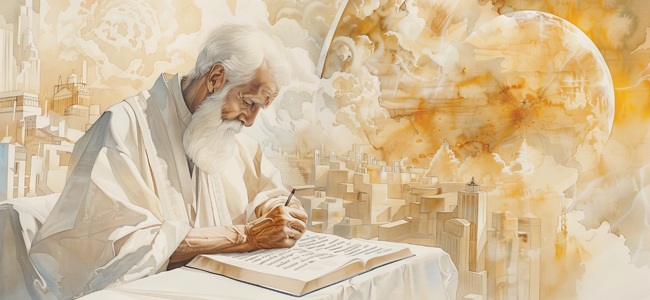
“John calls to remembrance the wonderful incidents that he has witnessed in the life of Christ. In imagination he again enjoys the precious opportunities with which he was once favored, and is greatly comforted. Suddenly his meditation is broken in upon; he is addressed in tones distinct and clear. He turns to see from whence the voice proceeds, and, lo! he beholds his Lord, whom he has loved, with whom he has walked and talked, and whose sufferings upon the cross he has witnessed. But how changed is the Saviour’s appearance! He is no longer ‘a man of sorrows, and acquainted with grief.’ He bears no marks of His humiliation. His eyes are like a flame of fire; His feet like fine brass, as it glows in a furnace. The tones of His voice are like the musical sound of many waters. His countenance shines like the sun in its meridian glory. In His hand are seven stars, representing the ministers of the churches. Out of His mouth issues a sharp, two-edged sword, an emblem of the power of His word.
“John, who has so loved his Lord, and who has steadfastly adhered to the truth in the face of imprisonment, stripes, and threatened death, cannot endure the excellent glory of Christ’s presence, and falls to the earth as one stricken dead. Jesus then lays His hand upon the prostrate form of His servant, saying, ‘Fear not; . . . I am he that liveth, and was dead; and, behold, I am alive for evermore’ (Revelation 1:17, 18). John was strengthened to live in the presence of his glorified Lord, and then were presented before him in holy vision the purposes of God for future ages. The glorious attractions of the heavenly home were made known to him. He was permitted to look upon the throne of God, and to behold the white-robed throng of redeemed ones. He heard the music of heavenly angels, and the songs of triumph from those who had overcome by the blood of the Lamb and the word of their testimony.”—The Sanctified Life, pp. 77, 78.
“As we near the close of this world’s history, the prophecies relating to the last days especially demand our study. The last book of the New Testament scriptures is full of truth that we need to understand. Satan has blinded the minds of many, so that they have been glad of any excuse for not making the Revelation their study. But Christ through His servant John has here declared what shall be in the last days, and He says, ‘Blessed is he that readeth, and they that hear the words of this prophecy, and keep those things which are written therein.’
“ ‘This is life eternal,’ Christ said, ‘that they might know Thee the only true God, and Jesus Christ, whom Thou hast sent.’ John 17:3. Why is it that we do not realize the value of this knowledge? Why are not these glorious truths glowing in our hearts, trembling upon our lips, and pervading our whole being?”—Christ’s Object Lessons, p. 133.
“There are lessons, deep, earnest, and all-important lessons, to be learned from the book of God.”—Fundamentals of Christian Education, p. 85.
“If Paul, in saying that the Scriptures are to make the man of God perfect, thoroughly furnished unto all good works, meant that nothing more should be written by inspiration, why was he at that moment adding to those Scriptures? At least why did he not drop the pen as soon as that sentence was written? And why did John, thirty years afterward, write the book of Revelation? This book contains another text which is quoted to prove the abolition of spiritual gifts.
“ ‘For I testify unto every man that heareth the words of the prophecy of this book, if any man shall add unto these things, God shall add unto him the plagues that are written in this book: And if any man shall take away from the words of the book of this prophecy, God shall take away his part out of the book of life, and out of the Holy City, and from the things which are written in this book.’ Revelation 22:18, 19.
“From this text it is claimed that God, who at sundry times and in divers manners spake in time past to the fathers by the prophets, and, in the commencement of the gospel day, by Jesus and His apostles, has hereby solemnly promised never to communicate anything more to man in that way. Therefore all prophesying after this date must be false. This, it is said, closes the canon of inspiration. If so, why did John write his gospel after his return from Patmos to Ephesus? In doing so did he add to the words of the prophecy of that book written in the isle of Patmos? It is evident, from the text, that the caution against adding to, or taking from, refers not to the Bible as we have the volume compiled, but to the separate book of Revelation, as it came from the hand of the apostle. Yet no man has a right to add to, or subtract from, any other book written by inspiration of God. Did John, in writing the book of Revelation, add anything to the book of Daniel’s prophecy? Not at all. A prophet has no right to alter the word of God. But the visions of John corroborate those of Daniel and give much additional light upon the subjects there introduced. I conclude, then, that the Lord has not bound Himself to keep silence, but is still at liberty to speak. Ever be it the language of my heart, Speak, Lord, through whom Thou wilt; Thy servant heareth.’ ”—Early Writings, pp. 136, 137.
The One who has stood as our Intercessor; who hears all penitential prayers and confessions; who is represented with a rainbow, the symbol of grace and love, encircling His head, is soon to cease His work in the heavenly sanctuary. Grace and mercy will then descend from the throne, and justice will take their place. He for whom His people have looked will assume His right—the office of Supreme Judge. . . .
“There is not a second probation for anyone. Now is probationary time, before the angel shall fold her golden wings, the angel of mercy, and shall step down from the throne, and mercy, mercy is gone forever. . . .
“Letters have come to me asking me if I have any special light as to the time when probation will close; and I answer that I have only this message to bear, that it is now time to work while the day lasts, for the night cometh in which no man can work. Now, just now, it is time for us to be watching, working, and waiting. . . .
“[Revelation 22:13–17 quoted.] Here we have the Alpha of Genesis and the Omega of Revelation. The blessing is promised to all those who keep the commandments of God, and who cooperate with Him in the proclamation of the third angel’s message. . . .
“None who have had the light of truth will enter the city of God as commandment breakers. His law lies at the foundation of His government in earth and in heaven. If they have knowingly trampled upon and despised His law on the earth, they will not be taken to heaven to do the same work there; there is no change of character when Christ comes. The character building is to go on during the hours of probation. Day by day their actions are registered in the books of heaven, and they will, in the great day of God, be rewarded as their works have been. It will then be seen who receives the blessing. ‘Blessed are they that do his commandments, that they may have right to the tree of life, and may enter in through the gates into the city.’ ”—The SDA Bible Commentary [E. G. White Comments], vol. 7, pp. 989, 990.