Growing Hearts On Higher Ground
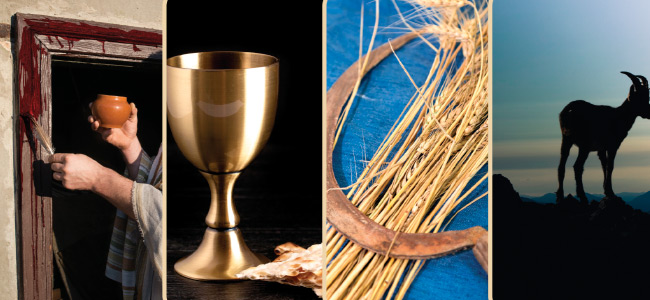
He had just turned 12 years old and was now going to attend the national Feast of Passover. Traveling from Nazareth to Jerusalem in the company of his parents and friends, Jesus, being a very attentive boy, observed every detail of the ritual centered on the sacrifice of that one-year-old, perfectly developed lamb.
Impressed by the Holy Spirit, the Son of man understood the spiritual implications of this sacrificial offering as it related to Himself, the Lamb of God that came to take away the sins of the whole world. Additionally, He found a way to inquire from the rabbinical teachers and doctors of the law about the coming Messiah and the fulfillment of prophecies and symbols related to Him.
Through the study of the Old Testament sanctuary service, we may also gain valuable insights into the plan of redemption and God’s character as revealed in the Bible. At this time, we will only consider three aspects:
1. Instructions for building
2. Christ’s relation to each object of furniture
3. The meaning of the daily and annual rituals.
By inspiration, the prophet David invites us to “give unto the Lord the glory due unto his name; worship the Lord in the beauty of holiness. . . . In his temple doth every one speak of his glory” (Psalm 29:2, 9).
Let us consider how the tabernacle/temple was built. Moses and David received instructions straight from the Lord. Moses was directed, “Thou shalt rear up the tabernacle according to the fashion thereof which was shewed thee in the mount” (Exodus 26:30). (Read Chapters 25–31 for details.)
Bezalel (from the tribe of Judah) and Aholiab (from the tribe of Dan) were called and gifted by God to lead and supervise the work. Regarding the tabernacle of the wilderness sojourn, it was to be built so that it was easy to transport as the children of Israel journeyed
Later, in reference to the more permanent structure referred to as the temple, the testimony of Solomon was: “Behold, I purpose to build a house unto the name of the Lord my God, as the Lord spake unto David my father, saying, Thy son, whom I will set upon thy throne in thy room, he shall build a house unto my name” (1 Kings 5:5).
In both cases, they built according to the specifics given through the instructions and inspiration of God. Read Exodus 39:32, 42, 43; 1 Chronicles 28:12, 19.
The temple built by Solomon was completed in seven and half years.
“So was ended all the work that king Solomon made for the house of the Lord. . . . And it came to pass, when the priests were come out of the holy place, that the cloud filled the house of the Lord, so that the priests could not stand to minister because of the cloud: for the glory of the Lord has filled the house of the Lord” (1 Kings 7:51; 8:10, 11).
Oh, how great is God’s mercy toward His children—yet we cannot presume upon this mercy! After this impressive temple was later destroyed, it was eventually rebuilt more modestly: On that occasion, “all the people shouted with a great shout, when they praised the Lord, because the foundation of the house of the Lord was laid. But many of the priests and Levites and chief of the fathers, who were ancient men, that had seen the first house, when the foundation of this house was laid before their eyes, wept with a loud voice; and many shouted aloud for joy: So that the people could not discern the noise of the shout of joy from the noise of the weeping of the people: for the people shouted with a loud shout, and the noise was heard afar off” (Ezra 3:11–13). Nonetheless this temple was blessed in that the desire of all nations was to enter there in bodily form (Haggai 2:7–9). Yet, this earthly structure was likewise destroyed, this time in A.D. 70.
“Howbeit the most High dwelleth not in temples made with hands; as saith the prophet, Heaven is my throne, and earth is my footstool: what house will ye build me? saith the Lord: or what is the place of my rest? Hath not my hand made all these things?” (Acts 7:48–50). So, where are we to look?
“Now of the things which we have spoken this is the sum: We have such an high priest, who is set on the right hand of the throne of the Majesty in the heavens; A minister of the sanctuary, and of the true tabernacle, which the Lord pitched, and not man” (Hebrews 8:1, 2, emphasis added).
The objects of the tabernacle had direct relationships with Christ and His ministry for our redemption. Let us review them:
Beginning with the courtyard—its outer curtain, the gate, the altar, and the laver; entering the holy place and going into the most holy place. All these furnishings have something to teach us about the coming Messiah, His life and death, His resurrection and priestly intercession. All are essential for our reconciliation and fitness for the life to come:
The book of Leviticus outlines many sacred observances, each with specific requirements:
1. Individual or general involvement with law-breaking.
2. Collective daily and annual services and feasts, including the exact time of a particular event. A parallel summary is found in the book of Hebrews 9:6, 7, which tells us about the various ordinances, which Leviticus 23 refers to as feasts.
Why are these instructions interesting for us, even today? “The Holy Ghost this signifying, that the way into the holiest of all was not yet made manifest, while as the first tabernacle was yet standing: Which was a figure for the time then present, in which were offered both gifts and sacrifices, that could not make him that did the service perfect, as pertaining to the conscience; Which stood only in meats and drinks, and divers washings, and carnal ordinances, imposed on them until the time of reformation. But Christ being come an high priest of good things to come, by a greater and more perfect tabernacle, not made with hands, that is to say, not of this building; Neither by the blood of goats and calves, but by his own blood he entered in once into the holy place, having obtained eternal redemption for us” (Hebrews 9:8–12).
Here we learn that the sacrifices and worship practices which involved the shedding of blood and specific sacrifices—ordained in advance by God Himself—were figures or symbols referring to Christ and His ministry on our behalf.
It is an exciting experience to discover the meaning of the prescribed sacrifices and established annual feasts of Israel, as we recognize the relationship between them and the ministry of our High Priest in the heavenly sanctuary.
It has been observed that sin cannot be explained; it must be paid for. Its payment is made with blood, because it carries the vital stream of life (Leviticus 17)—and this is the only way to answer for the transgressions of God’s holy Law. See Hebrews 9:22. From Adam’s fall until the death of Jesus Christ at the cross of Calvary, the life of an innocent animal was required for every sin committed, or the guilty one could not be pardoned.
But through His blood shed on Calvary, Jesus paid it all. By the unique sacrifice of Himself, our Advocate, “is the propitiation for our sins: and not for ours only, but also for the sins of the whole world” (1 John 2:2).
After the sacrifice had been performed, all that the priests were instructed to do with the blood has a direct relationship with what Jesus Christ went to perform in the heavenly sanctuary on our behalf. Read Hebrews 8:1–3; 9:11–15.
Never are we to lose sight of the important work being done on our behalf in the heavenly sanctuary. Thus, we are admonished:
“As a people, we should be earnest students of prophecy; we should not rest until we become intelligent in regard to the subject of the sanctuary, which is brought out in the visions of Daniel and John. This subject sheds great light on our present position and work, and gives us unmistakable proof that God has led us in our past experience. It explains our disappointment in 1844, showing us that the sanctuary to be cleansed was not the earth, as we had supposed, but that Christ then entered into the most holy apartment of the heavenly sanctuary, and is there performing the closing work of His priestly office, in fulfillment of the words of the angel to the prophet Daniel, ‘Unto two thousand and three hundred days; then shall the sanctuary be cleansed.’
“Our faith in reference to the messages of the first, second, and third angels was correct. The great waymarks we have passed are immovable. Although the hosts of hell may try to tear them from their foundation, and triumph in the thought that they have succeeded, yet they do not succeed. These pillars of truth stand firm as the eternal hills, unmoved by all the efforts of men combined with those of Satan and his host. We can learn much, and should be constantly searching the Scriptures to see if these things are so. God’s people are now to have their eyes fixed on the heavenly sanctuary, where the final ministration of our great High Priest in the work of the judgment is going forward—where He is interceding for His people.”1
May the Lord impress us with the importance and urgency of the study of the Sanctuary service. May the Holy Spirit guide and enable us not only to follow Jesus’ final work in Heaven, but also to call the attention of others to this precious subject. This experience is essential in the preparation to meet the Lord in peace, as it is written, “prepare to meet thy God, O Israel” (Amos 4:12). Amen!