Growing Hearts On Higher Ground
Back in the 1970s—before I was ever born—my father began to feel something unusual, as if his body were slowly turning to stone. After an extensive series of tests, the diagnosis came: scleroderma, an autoimmune disease that stiffens the body, imprisoning it in an invisible armor.
The news hit the family like a bomb. My father and uncle traveled 217 miles back to the family farm, burdened by the weight of an uncertain future. That night, under the starry sky of the gaucho plains, my uncle spoke with my mother about the grim prognosis. The disease was progressing rapidly, and the shadow of death hovered like a dark cloud over everyone.
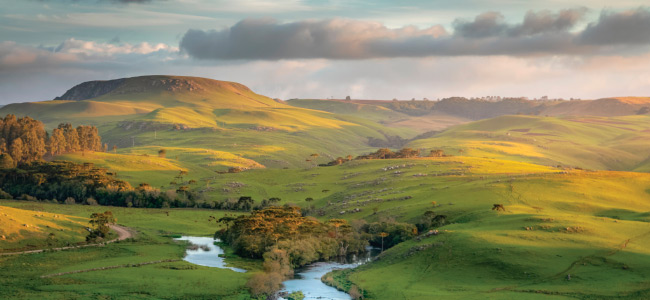
It was in the rural setting 62 miles from the city of Bagé, surrounded by endless fields and expansive skies, that my parents had first met and eventually married.
Although veiled racism and class prejudice weighed heavily upon my hard-working mother as a descendant of the Charruas, an indigenous ethnic group known for their dark skin, straight black hair, and almond-shaped eyes, she had pressed on with dignity and resilience. She knew her worth was not defined by others’ opinions, but by the love she shared with my father and her tireless dedication to her family.
It was after my father returned for treatment in the capital that my mother began to notice strange symptoms in her own body. From her life experience, her intuition told her exactly what it was. She was pregnant again. For her, at that time, pregnancy was a relatively frequent companion. However, she also had a troubled history when it came to childbirth. Over the years, she had suffered several miscarriages. The babies had been born at six, seven, or eight months—already lifeless. Now, on top of the tragic news about my father’s health, came the prospect of yet another pregnancy likely ending in sorrow.
Amid the anguish of uncertainty, she found an old Bible in the small library at the farmhouse. She was starving for spiritual comfort—for an encounter with God. Among its timeworn pages, in the book of 1 Samuel, she came across the story of Hannah and her son—a woman who, immersed in the pain of infertility, cried out to God with all her heart and received a miracle: the baby Samuel, who became a great prophet of the Lord. Those words seemed to leap off the page, echoing directly in her heart. Inspired by the narrative, my mother felt the flame of faith ignite in her chest, even while surrounded by the darkness of uncertainty.
In the solitude of that remote region, where the silence of the nights was broken only by the distant chirping of crickets and the hooting of owls, she made a solemn covenant with God. With her face bathed in tears and her trembling hands clutching the Bible, she promised to dedicate the next child—should he come into the world—to the hands of the Divine. But this covenant came with conditions: the pregnancy would have to go well, the child would have to be a healthy boy, and—above all—my father would have to overcome the incurable disease that threatened his life. It was a bold vow, forged in the furnace of despair, but also a cry of hope cast into the abyss of fear.
To her, that covenant was far more than a bargain; it was a declaration of absolute faith, even without full understanding—a desperate attempt to find meaning amid the chaos. She knew she was offering something precious—a piece of herself—but she also believed that if God answered her prayer, it would not be by chance. Every word spoken in that moment carried the weight of her memories, struggles, and dreams. And so, in the stillness of that starry night, she sealed her promise, anxiously waiting to see whether the merciful Father would hear her cry.
My family was not deeply religious. My parents were non-practicing Catholics and, up until that point, had never shown any particular spiritual fervor. Yet, in those critical months, my mother devoted herself to prayer like never before. It was as if each prayer were an invisible thread she wove between despair and hope, pleading for miracles amid uncertainty. And against all odds, the pregnancy progressed without major complications—at least none that could have endangered my life. Still, I was born prematurely, at eight months, on June 16, 1976, at the Santa Casa de Misericórdia Hospital in Bagé. I came into the world below the minimum required weight, but healthy enough to survive. To my mother, that alone was a great victory.
When my father heard the news that I was a boy, something seemed to ignite within him. It was my mother’s idea to give me his name, adding the suffix “Junior” to mark the bond of fatherhood. It was more than a practical decision; it was a statement of continuity, as if the family legacy was being sealed at that moment.
At the time, my father was already bedridden, his movements limited by the relentless progression of scleroderma. But something extraordinary happened. Two days after my birth, he managed to get up from his hospital bed to walk on his own. It was the first step in a recovery no one had anticipated. Although the aftereffects remained—his fingers would never fully open again—he regained nearly all of his former independence. When I was born, he was 57 years old—an advanced age to become a father again—yet his determination was unshakeable.
In 1980, when I was just four years old, Cilene was born—the youngest in our family. My father, now 61, and my mother, 42, still found strength to expand the household. In all, we are six siblings. I have five sisters—four of them much older than I by several years.
Around 1985 or 1986, while exploring the dusty corners of the small library at the farm, I found something that would change my perception of the world: children’s books with comic-style illustrations about the life of Jesus. The pages, printed in black and white, featured simple drawings, yet they were filled with depth. I was captivated. Right there before me was the complete story of Christ—from His humble birth in Bethlehem to His sacrificial death and triumphant resurrection. I absorbed every frame, every word, and within a few hours, I had devoured all the content. It was as if I had discovered a hidden treasure.
The impression it left on me was so overwhelming that, that very morning, I felt an irresistible urge to connect with what I had read. I went into the bedroom, closed the door behind me, and knelt beside the bed. There, alone, with the silence of the fields as my witness, I said a sincere prayer to God. I don’t remember the exact words that came from my young lips, but I’ve never forgotten the intention behind them. I asked Jesus to guide my life, to help me be good, and that one day, He might look at me with pride. It was a naive prayer, perhaps even a little Pharisaical, reflecting the human tendency to try to earn divine favor through personal effort. Today, I see that plea as typical of a child trying to grasp their relationship with the Infinite.
What stayed with me was a compelling tendency to always seek out religious materials or subjects related to spirituality. A few months later, divine providence brought me into contact with a devout woman named Josefa. With deep roots in the Baptist Church, she introduced me to Protestant worship services, where I learned the basic principles of the Christian life: who our Lord and Saviour Jesus Christ was; the Holy Spirit; the Second Coming of Jesus; the privilege of prayer, and so on. It was while attending services at the Baptist Church that I received my first New Testament—with Psalms and Proverbs included.
The years passed, and now it was 1990. That decade opened an ocean of new possibilities for my life, in which Providence was fully invested, intervening so that God’s purpose might finally begin to unfold. One of my older sisters began receiving visits at her home from a woman who was a member of the Jehovah’s Witnesses organization. As she studied with this woman, she was also given copies of the famous Watchtower magazine Awake!® That publication immediately caught my attention for its easy and engaging reading style, and it featured numerous biblical applications. After reading a few issues and gaining access to some of the books they published, I gradually distanced myself philosophically from the Baptist worldview and began drawing closer to Russellism (the teachings of the Jehovah’s Witnesses).
In the early months of 1991, I received another issue of the Russellite magazine, and on the back cover, I came across an advertisement that immediately caught my attention: it was promoting a book that promised to unveil the main secrets of the book of Revelation. For years, I had felt a strange fascination with the last book of the Bible, and now it seemed that my thirst for knowledge was about to be quenched—that I would finally find answers to all my doubts and curiosities.
So, I went to my father and asked him for that book as a gift. I was eager to read it and assumed he would gladly get it for me. He had always bought any kind of reading material I had asked for.
When asking my father for the Jehovah’s Witnesses’ book on Revelation, the answer I expected was: “Alright, son. Find out the price of the book and I’ll buy it for you.” But, much to my surprise, that’s not what happened! My father instead gave quite an unexpected response:
“No, son. I’m not going to buy that book for you.”
I was practically speechless, because until then, I couldn’t recall a single instance when my father had denied me any reading material. He loved to see me reading. How could he deny me something that would add to my education and knowledge? I decided to try again—maybe he had misunderstood my request. But the second response was the same:
“I’m not going to buy that book for you.”
That was one of the saddest afternoons of my life. My curiosity had reached epic proportions, and I simply could not satisfy it! All I remember from that afternoon is pacing back and forth, impatient and irritable. Little did I know that God had prepared a surprising twist in my life that very day—and had I known this verse, “And we know that all things work together for good to them that love God, to them who are the called according to his purpose” (Romans 8:28), I might have been more patient.
I don’t know exactly why, but I went over to look at the bookshelf in our house. Right there, all that time, sat a very special book, waiting for me to read and explore it. It was called A New World, written by an unknown author named Alfons Balbach. It was a humble book, printed in black and white, without the visual appeal of the Jehovah’s Witnesses’ publications. Yet as I flipped through the table of contents, I came across some incredibly intriguing section titles:
“THE SEVEN CANDLESTICKS”
“THE SEVEN SEALS”
“THE SEVEN TRUMPETS”
And many more...
“Wait—what?” I thought. “These titles cover the very same topics that the Jehovah’s Witnesses’ book was supposed to explain. And why has this book been sitting here on the shelf in my house all this time, and I never even opened it?”
Immediately, I asked my mother if she knew where the book had come from, and her answer surprised me:
“My son, about two years ago a young man visited us offering health-related materials. That’s when I bought the collection of five green books on natural remedies—and this book came as a free gift.”
Well, once I knew the origin of the book, I took it off the shelf and dove into its pages. The reading was fascinating. The book provided practically all the answers I had been seeking about Revelation. For years—since I can remember, around 1986, when I received my first New Testament from the Baptist Church—the book of Revelation had gripped my attention.
The result of encountering that book was fascinating. Within about a week, I had devoured the material and uncovered some eye-opening truths. Since the structure and writing style were very similar to those of the Jehovah’s Witnesses, I assumed the book had been published by the same organization. Yet in reality, my mother had been visited by a colporteur from the Reform Movement—though at the time, I didn’t even know the word colporteur, nor the name of the church that would one day totally transform my life.
My father had a very kind foster brother whom we called Dindo. One day when talking with him about religion, he introduced me to the truth about the holy Sabbath—the missing piece that would help me better understand God’s will for my life. After just a few hours of conversation, I learned the true identity of the organization that had published Pastor Balbach’s book—they were the Seventh Day Adventist Reform Movement.
I came home quite upset that day. Why should the Sabbath still be observed, when I had always thought it was simply a cultural custom of the Jewish people? Why had the Baptist Church never told me about this? Finally I got a chance to set aside more time for reflection and to reread certain parts of A New World. I spent several hours throughout the week diligently studying the book, piece by piece, until Friday finally arrived. It would be the first Sabbath of my life observed as a religious experience, and I would have the opportunity to keep it “according to the commandment” within the understanding of a 14-year-old teenager.
By that point, I had already learned that the holy Sabbath should be kept “from sunset to sunset,” not from midnight to midnight. So, as the evening approached, I went out to the southern side of the farm. Right next to the house stood a boxwood tree, a leafy one, under which I had spent many joyful childhood moments swinging on a wooden swing. There, as the late afternoon drew near, my anticipation only grew. “How can I keep the Sabbath in a way that will please God? How will He accept my devotion?”
Absorbed in these thoughts, I watched the sun touch the horizon and slowly descend to shine upon other parts of the globe. When the last trace of sunlight disappeared behind the trees, my breath nearly stopped:
“The sacred hours have now begun. What should I do? What should I think about? What must I avoid meditating on?”
A flood of questions filled my mind. Then, with all the solemnity I could muster, I stepped out from beneath the tree and walked toward the room where I usually slept. There, in the solitude of the southern Brazilian plains, I knelt before God and prayed for heaven’s blessing over this new chapter of my life.
The months of 1991 passed by until the moment finally came for me to personally visit the Reform Movement church. On a Wednesday evening at 7:30 p.m., together with my neighbor, I arrived at the place of worship. It was a very modest church, nothing like the Baptist Church. Among the Baptists, more than a thousand people would attend the services, but in the Reform Movement, only about fifteen people were present that night. The preacher was a man around 37 years old. He didn’t have great diction and wasn’t a polished speaker like those accustomed to addressing large crowds, but the message he delivered that night touched my heart deeply. It was based on Romans chapter 7 and dealt with the apostle Paul’s struggle between the spirit and the flesh. That depiction of the apostle’s inner battle echoed in my mind—it was the exact same struggle I had been experiencing for quite some time. Right there, in the midst of that sermon, surrounded by humble but loving people, I made my decision to stand for the Lord.
That decision had an unimaginable impact on my life. By that time, I had already learned about dietary principles and had to make one of the most difficult choices of my life. For me, eating meat was an essential part of my lifestyle. Having been raised in one of the most traditional regions of the country—Rio Grande do Sul—the act of eating meat is one of the non-negotiable cultural identities of the gaúcho people.
When my mother heard of my decision, she was deeply scandalized. She couldn’t see in my choice the unfolding of a divine plan that had begun even before I was born. Those were hard days . . . but the Lord Jesus was by my side, giving me strength to stand firm.
Sabbath became a delight. I spent much time with the brethren and with Spirit of Prophecy books, and finally, on Sunday, March 15, 1992, the day came for the Holy Spirit to seal the patient work He had been developing in my life for years. That day, I surrendered myself to God through holy baptism, just before the age of 16.
So, think about it: What were the real chances of me finding the Reform Movement on my own, without the help of the Spirit of the Lord? A church with only about 25 to 30 members in a city of nearly 100,000 inhabitants? There are so many variables in life that statistically, it would be almost impossible for something like that to happen due to the extremely low probability. Truly, it was a miracle of God—a miracle as great as the one He worked in my father, healing him from a terminal illness, and in my mother’s heart, leading her to surrender her only son into God’s hands, even though the outcome of that vow turned out to be very different from what her imagination had envisioned.
Sadly, in 1998, my mother passed away from lung cancer caused by smoking. But before her death, she said to me:
“My son, I ask you to forgive me for all the pain I caused you. I’m very sorry, but I couldn’t overcome the resentment I felt toward the Reform Church, though I have accepted Jesus in the Adventist Church. I know I’ve fought against God. I had made a vow to Him, but I didn’t like the outcome. It was hard for me, but I’ve had to acknowledge that I cannot fight against Him. Pray for me, my son.”
Not long afterwards, as my father and I visited the Baptist lady who had introduced me to the gospel, he said, “I don’t know how to explain it, but I’ve always had this feeling that there is some mission or greater purpose for me here on this earth. Why is that? Could there be a reason for it?”
She boldly answered: “Mr. Dorval, that’s nothing less than the Spirit of God working in your heart. Why do you think you’re still alive at 91 years old, when more than 90% of people die long before reaching that age? It’s God who sustains life. He’s been waiting for your surrender; He’s been working in your life for decades. And this extra time He’s given you—it’s because He loves you and wants your heart. How much time do you think you have left on this earth? How long will you keep Him waiting? Accept Jesus today.”
About 30 or 40 days after that conversation, I received a phone call from my father. He told me that he had given his heart to Jesus and was now attending the very same church where I had come into the faith, in our hometown of Bagé. What wonderful news! Unbelievable! I wept with joy for hours when I heard it. His baptism was scheduled for October 2011.
In mid-August, I received another call from him, telling me about a dream he had had the night before. In the dream, he was suffering greatly, struggling to climb a steep hill but lacking the strength to reach the top. At the summit, he could see a magnificent pasture, swaying in the breeze, with a calm, cool wind and a deep blue sky. Halfway up, the heat became unbearable, and he began to sweat profusely. He was ready to give up when a hand touched his shoulder. When he turned to see who it was, he said the person beside him was me. And in the dream, I told him:
“Don’t give up, Father. With God’s help, you and I will reach the other side together.”
According to his account, when we reached the summit, a wonderful peace filled his heart. He fell to his knees in ecstasy, and together we praised the Lord and enjoyed the most beautiful scene and the most refreshing breeze. Then he woke up. The next day, he was hospitalized due to a bladder infection and passed away peacefully on September 7, 2011—about a month before his baptism was to take place.
It’s a memory I will carry with me forever—until we meet again on the other side of eternity, after the special resurrection.
But God’s blessings did not end there. God also touched the heart of my youngest sister, Cilene, and her daughter, my niece Natália, and both were baptized in our church. I can now say I am no longer alone on this earth—and this legacy of faith has been shared by members of my blood family as they embraced the same faith that has brought me so much joy.
I’ve shared this testimony here in this wonderful magazine to encourage you, wherever you may be, never to feel alone. Every person has a story, and God has a personalized plan for each one of us. There are many things in this world that may seem dark and confusing, but everything is part of the Lord’s plan for you. Don’t be afraid, don’t be discouraged—for one day you, too, may pause, look back, and tell of the great blessings the Lord has done for you! Amen.