Growing Hearts On Higher Ground
Perhaps you’ve felt it—that unspoken, awkwardly growing distance that spreads between you and those who were once close to you. Not because of some tangled dispute, but through the slow erosion caused by self-serving ambition, misunderstanding, and unmet expectations. Does that sound familiar?
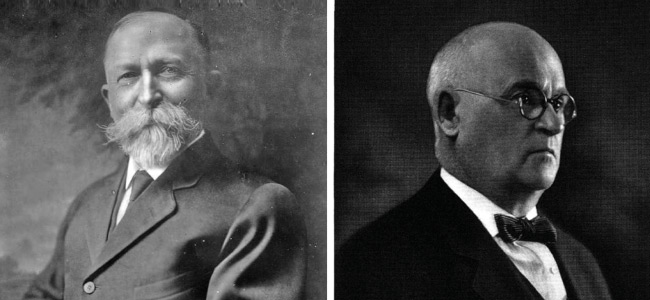
Back in the late 19th-century, Battle Creek, Michigan was more than a quiet Midwestern town. It had become the epicenter of a faith-fueled health movement and even the birthplace of a revolutionary breakfast. And at the center of it all stood John Harvey Kellogg—no ordinary small-town doctor. As a Seventh-day Adventist, he led the world-famous Battle Creek Sanitarium, where he pioneered vegetarian diets, hydrotherapy, and a holistic vision of health that embraced both body and spirit. His success brought him to meet with not only some of the most challenging diseases in North America, but also U.S Presidents, celebrities and businessmen such as members of the Roosevelt family, Calvin Coolidge, Henry Ford, Thomas Edison and J.C Penney, among many others.
Will Keith Kellogg was the more subdued, introverted brother—innovative, patient, and quietly intuitive. Yet in the shadow of John’s towering ambition and public acclaim, he often felt unseen, even diminished. Historians note that John sometimes treated Will like what they called a “lackey”—the equivalent of a modern-day assistant or junior assistant with no real say, kept around simply to carry out orders. Accounts describe Will constantly scribbling down his brother’s ideas at all hours. He had a quiet ingenuity—managing the Sanitarium’s daily operations, experimenting tirelessly with cereal recipes, and identifying a gap in the market. The reality was that far more people wanted a healthy breakfast than could ever afford to seek treatment at the Sanitarium. Recognizing that unmet demand, he struck out on his own and launched what became the Kellogg Company.
Then came the night that would forever change Will’s fate: a batch of dough left too long in the rollers emerged as crisp, golden flakes. And being the quietly ingenious man he was, Will saw in them not just a new texture or a recipe gone wrong, but an amazing opportunity to reach thousands of Americans with the same wholesome breakfast served at the sanitarium.
Then came the rupture that set their paths apart. Will believed in growth and outreach; John was resolved to keep the cereal strictly therapeutic—served only within the sanitarium’s walls, part of its controlled, healing environment. In fact, John expressly forbade Will from distributing the cereal beyond patient use, insisting it remain part of the sanitarium’s mission alone.
This was not a clash over innovation—it was a clash over value. Pride and jealousy began to root themselves bitterly in the brothers’ hearts.
But Will refused to back down. He hired marketers, adjusted the recipe with salt and sugar to make it appealing, and in 1906 launched the Battle Creek Toasted Corn Flake Company. His fledgling venture would evolve into the iconic Kellogg’s Company we know today.
John was furious—and he didn’t just simmer quietly. He sued his brother, disputing Will’s right to use the Kellogg name. The courts ultimately sided with Will. His brand soared, filling pantries around the world while the fraternal bond beneath . . . was shattered.
Despite his sweeping success, Will remained embittered and never reconciled with John. Two of his sons even cut ties completely with that other branch of the family. John, too, sought healing—writing a heartfelt letter late in life to bridge the divide—but the note never reached Will, being intercepted by a secretary who felt it made John appear weak.
Jesus didn’t say, “By your innovation they will know you are my disciples,” or “By your success. . . .” On the contrary, He said:
“By this shall all men know that ye are my disciples, if ye have love one to another” (John 13:35).
The Kellogg brothers missed that unity. And it cost them dearly—more than they realized.
“One of the terrible fruits of sin is that it separates very [close] friends, puts brother at variance against brother.”1
Jealousy erodes trust, joy, and shared purpose. It hinders our mission. And yet God’s desire for His people isn’t merely to avoid brokenness—He calls us to thrive together.
We see this tension not only in government or family businesses, but in Scripture itself. The same undercurrents that fractured the Kellogg brothers’ bond—ambition colliding with pride, closeness unraveling into toxic competition—flow through the stories of God’s people. Left unchecked, they shrink our vision and turns partners into rivals and the mission field into territory that must be controlled. But Jesus instead points us to the heavenly way: a community where gifts aren’t hoarded but given, where someone else’s win feels like a team win, where love outruns ego. That’s the culture Jesus envisioned for His church—one so radically different that the observing world would recognize us as His, by the way we love each other.
Ellen White saw this danger clearly. She appealed:
“There is not the least need, my brethren, of disunion and variance among us. No such thing should exist among Christians. When you speak let your words savor of unity and love. We are Christians; how can we be in the least perplexed in regard to the course we should pursue toward each other?”2
She pleaded for love, for respect, for recognition of calling—even when paths diverge: “You must not think that the Lord has placed you in the position that you now occupy as the only men who are to decide as to whether any more light and truth shall come to God’s people.”3
The Kellogg brothers remind us that jealousy doesn’t always announce itself with shouting and slammed doors. Sometimes it’s quiet—with polite smiles masking wounded pride, unfinished conversations that never quite heal. And while the cereal brand soared, something far more important was lost: the bond of brotherhood, the shared mission, the witness of love that Jesus said would mark His disciples.
That’s the real cost of jealousy. It doesn’t just wound you—it slows the mission of God! It shifts your energy away from building and toward battling. And that pattern is not new.
Jealousy is not a minor flaw that the Bible brushes aside. It is one of the most corrosive traits of the human heart, and Scripture never shies away from exposing it as such. In fact, the very first human death recorded in the Bible was not from war or accident—it was a murder born out of jealousy and envy.
In Genesis 4, Moses tells the story of two brothers, Cain and Abel. Both had been taught the instructions God gave after the Fall—to bring a lamb as a sacrifice, a living symbol pointing to the day when God Himself would offer His own life to redeem a world enslaved by sin. Abel obeyed. He brought what God had asked for, not as a mere ritual, but in hope and faith that the promised Deliverer would come. Cain, however, chose a different path. He brought the finest produce from his garden—the work of his own hands. It was beautiful, but it lacked the one thing God desired most: a trust that looked beyond human effort to the saving sacrifice God had promised.
When God looked with favor on Abel’s offering and not on Cain’s, something in Cain’s heart twisted. Jealousy took root. And when jealousy takes root, it never stays put—it grows, it festers, it demands more. Cain lured his brother into the field, and in cold blood, killed him.
Cain didn’t wake up that morning planning to kill his brother. This wasn’t an elaborate murder plan. God had even spoken to him: “If thou doest well, shalt thou not be accepted? and if thou doest not well, sin lieth at the door” (Genesis 4:7). Cain still had a choice. But instead of humbling himself and bringing the sacrifice God had asked for, he let jealousy take root, hardening into resentment, and resentment into rage. The first murder in human history wasn’t about land, wealth, or survival — it was about jealousy, envy and bitterness toward those who loved God.
Joseph’s brothers: Jealousy turns family into slave traders
Joseph’s story in Genesis 37 doesn’t begin with slavery; it begins with family dynamics that many Christian psychologists would call a breeding ground for resentment. Jacob, their father, openly favored Joseph, giving him the famous coat of many colors. This favoritism created what Dr. Gary Chapman calls our “basic emotional need . . . to be genuinely loved by another, to know a love that grows out of reason and choice, not instinct.”4 When it feels as if love is being distributed unequally, siblings do not share affection—they compete for it. Joseph’s brothers didn’t just see a coat—they saw a symbol that Joseph was more valued than they were. That wound began to fester.
The tension escalated when Joseph shared dreams that God had given him, visions that placed him in a position of leadership over his family. In a spiritually healthy environment, such dreams might have sparked curiosity, prayer, or even pride in seeing God’s call on a brother’s life. But in this family system, already fractured by favoritism and emotional scarcity, Joseph’s revelation became fuel for resentment. Their “love tanks,” as Gary Chapman might say, were already empty; every blessing Joseph received felt like a withdrawal from their own. Christian counselor June Hunt defines envy as “feeling resentful about the advantages . . . of others,” noting that, left unchecked, it “can escalate to harboring ill will or acting out against the one envied.”5
For Joseph’s brothers, his God-given future was not a reason for gratitude, but a threat to their worth.
Jealousy hardened into action when the opportunity arose. As Genesis records, the brothers saw Joseph coming from a distance and conspired to kill him. Only Reuben’s intervention kept them from murder, but they still stripped Joseph of his coat, threw him into a pit, and sold him to Midianite traders. This is where jealousy in the family shows its most destructive form—when the bond of blood is overpowered by the perceived need to remove a rival. Family loyalty gave way to self-protection, and love was swallowed by envy.
John Townsend explains that envy and resentment arise from “the perception that all of the good is outside of oneself,” leaving a person “desiring to destroy the good of others.”6 That’s what resentment does when left unchecked—it gradually dehumanizes the one we resent, turning people made in God’s image into rivals to be diminished rather than souls to be loved.
The lesson here is sobering: Jealousy reframes relationships through the lens of threat, not trust. When that happens in a family, even shared history and deep connection can be rewritten as competition. The brothers could not see Joseph as a fellow son of Jacob or as a young man God was shaping—they could only see him as someone standing in the way of their own significance, worth and purpose. And once you see someone only as a threat, it becomes dangerously easy to push them away, even at great moral cost.
In Effective Biblical Counseling, Larry Crabb writes that when we “cut God off . . . [we] cut off the only source of true significance and security.”7 In other words, whenever we look to ourselves—or to others’ approval or success—for worth, we step out of the only love that cannot be earned or threatened. Our insecurity grows in proportion to our distance from Him.
In reality, Joseph’s brothers didn’t need to tear him down to have a sense of worth—and neither do we. Jealousy thrives when we forget that the same God who blesses others has an unshakeable, personal plan for us, too.
Perhaps one of the clearest portraits of jealousy is in the story of Saul and David. Saul began his reign with humility. Chosen by God as Israel’s first king. The book of Samuel describes Saul’s attitude as being “little in [his] own sight” (1 Samuel 15:17). But somewhere along the way, something shifted.
“Saul presumed upon his exaltation, and dishonored God by unbelief and disobedience. Though when first called to the throne he was humble and self-distrustful, success made him self-confident. . . . He lost sight of his dependence upon God, and in heart departed from the Lord.”8
By the time the Philistines marched against Israel at the Valley of Elah, Saul’s relationship with God was already fractured. He had disobeyed God’s loving commands (1 Samuel 13 and 15) and refused to heed the prophet’s warnings. After blatantly disregarding God’s leadership in his life, his spiritual authority was hollowed out.
When Goliath taunted Israel, Saul—head and shoulders taller than his people—lacked the courage to stand. Fear had taken over.
“And the Lord no more communicated with Saul, or instructed him through Samuel. He had chosen to follow his own will, and had rejected the word of the Lord. God left him to be guided by his own judgment, which he had chosen to follow rather than to obey God. Saul had no true repentance. He had been exalted because he was made king. He manifested greater anxiety to be honored by Samuel before the people than to obtain forgiveness and the favor of God.”9
Jealousy and envy will do this to men and women. It’s a lonely path. Then David arrived. Young, unknown, but full of God’s presence. In 1 Samuel 17:26, David reveals his intentions: “For who is this uncircumcised Philistine, that he should defy the armies of the living God?” The whole reason David faced the giant was not to make a name for himself, but rather to protect the name of God. This mindset should drive our personal projects and church mission. It’s not about us; it’s about God.
He faced the giant armed not with armor, but with faith—and he won. The victory was God’s, but the song that echoed through Israel made it personal:
“Saul hath slain his thousands, and David his ten thousands” (1 Samuel 18:7).
In that moment, Saul’s insecurity crystallized into envy.
“Instead of manifesting humble gratitude to God that Israel had been saved out of the hand of their enemies by the hand of David, a cruel spirit of jealousy comes upon [Saul], and, as in times past, he yields himself to its control. . . . His fears were aroused, that this was indeed the man who would take his place as ruler.”10
From that day onward, Saul watched David with suspicion. The relationship spiraled. At meals, Saul’s rage boiled over—more than once he hurled a spear at David in a fit of uncontrollable anger (1 Samuel 18:10, 11; 19:9, 10).
This wasn’t just temper. It was the logical end of jealousy left unchecked. We are warned: “Envy is the offspring of pride, and if it is entertained in the heart, it will lead to hatred, and eventually to revenge and murder.”11
David fled, joined by loyal men, while Saul devoted years to hunting him down—years that could have been spent leading Israel in righteousness and preparing the nation for its future.
The tragedy is this: Saul didn’t lose his throne the day David was anointed king. It began the day he could no longer bear to hear another man praised. Jealousy blinds us until God’s victories feel like our defeats, and His blessings upon someone else feel like grand theft. That is the misery of jealousy—it builds a kingdom so small that even heaven’s music is heard as a “tinkling cymbal” if it is not sung to us.
The anatomy of jealousy: Colleagues into conspirators
Jealousy is never just about the other person. It’s about the story we tell ourselves. That’s what makes the story in Daniel chapter 6 so piercing. The governors and presidents in Babylon had power, wealth, and influence, yet the moment Daniel was favored above them, their sense of self collapsed. Suddenly, his excellence was not a blessing to the kingdom but a threat to their identity. That false story took root in Medo-Persia’s court, and it poisoned everything.
Psychologists remind us that jealousy doesn’t just wound the soul—it narrows the mind. When feelings of threat take over, the body often floods with cortisol and adrenaline, pushing us into survival mode. That survival instinct is classically described in three responses: fight, flight, and freeze (some even add a fourth, fawn).
The fight response is the most obvious—and the one we often associate with jealousy. Think of Joseph’s brothers in Genesis 37, or even the stepsisters in Cinderella: jealousy often seeks to belittle, undermine, or attack the one it perceives as a rival.
But the silent responses of flight and freeze can be just as dangerous. Flight withdraws from community, often shifting into a new circle to escape the painful comparisons. Freeze is more subtle—and perhaps more destructive. It is staying put while bottling up feelings of inadequacy, letting comparison paralyze growth and mission.
“[Jeremiah 17:5, 6 quoted.] This is precisely the condition of those who have not a vital connection with Christ. They seem to be ever working at cross-purposes with God, and are so full of jealousy, evil surmising, discord, and strife—Satanic attributes—that they are constantly lying against the truth; they are not doers of the words of Christ. Yet many church members are in this very position. They dwell, as it were, in the salt land, in a parched wilderness.”12
Yet Scripture shows us another way. When Cain was consumed by jealousy, God warned him, “If thou doest well, shalt thou not be accepted?” (Genesis 4:7). The hope here is simple but profound: God always provides a way back. Jealousy does not need to define us. Instead of narrowing our vision, grace expands it—shifting our focus from competing with others to rejoicing in God’s work, wherever it appears. The antidote to jealousy is not self-mastery but surrender: “He must increase, but I must decrease” (John 3:30).
Back to Daniel . . .
That’s why, instead of joining Daniel in faithful governance, his peers wasted their energy scheming against him. Gary Collins notes that jealousy is psychologically exhausting—it drains resources that could be spent on growth, love, and mission.13,14,15
In other words, the hours those men spent plotting were hours stolen from the good they might have accomplished. Jealousy didn’t just make them bitter—it made them useless.
“Envy and jealousy are like two sisters who blend together. . . . Everything that can be made use of will be employed to place the envied man in an unfavorable light before the people.”16 Daniel’s very integrity became intolerable because their hearts were not anchored in God. They needed the applause of men, and when it shifted to Daniel, they could not bear it.
Notice Daniel’s contrast. While jealousy shrank the world of the presidents and princes to one obsession—destroy him—Daniel’s heart remained wide open to God. He prayed with his windows open, as he always had, giving thanks. No scheming, no retaliation, no fear. Where jealousy isolates, faith connects. Where jealousy consumes energy in suspicion, faith channels energy in worship. Daniel embodied that truth in the lion’s den, and it is why he emerged whole when his enemies perished.
The tragedy of Daniel chapter 6 is not only what happened to the conspirators—it’s what could have been. Imagine if they had joined Daniel in governing with integrity. Imagine what wisdom and justice they might have accomplished together. Instead, jealousy devoured their legacy: The presidents and princes chose the opposite. In the end, their jealousy left them nameless in history, while Daniel’s faithfulness still preaches today.
IV. The psychology of jealousy
The story of Daniel in the lions’ den is not just about politics—it’s about the human heart under pressure. Psychologists remind us that jealousy is not simply envy in disguise. Envy says, “I want what you have.” Jealousy says, “I might lose what’s mine.” That subtle shift makes jealousy more defensive, more anxious, and often more destructive. The administrators in Babylon didn’t envy Daniel’s gifts—they feared his promotion would eclipse their own positions.
If your worth depends on being praised, promoted, or preferred, then anyone else’s success feels like an existential threat. This is why jealousy is so exhausting. Recent research shows that it triggers the brain’s threat-detection system, releasing stress hormones and narrowing focus to self-protection rather than collaboration. In other words, when jealousy takes hold, you stop leading, you stop loving, and you start to merely survive. The presidents and princes in Daniel 6 weren’t thinking about the empire’s good. They were in “survival mode,” plotting only to protect their fragile sense of worth.
The spiritual cost is even greater. Jealousy takes our eyes off God’s given mission and turns them inward. Instead of asking, “How can we glorify Him together?” we ask, “How can I keep from being overshadowed?” That shift is deadly. Gospel mission priorities are replaced with personal preservation. The inspired warning is piercing:
“Jealousy leads a man to suspect another of seeking to deprive him of advantages and position.”17
When leaders operate out of that suspicion, the church’s credibility before the world is weakened, and the Spirit’s presence is grieved.
Jealousy fractures relationship, but love strengthens and multiplies relationships. Jesus gave us the unmistakable mark of His people:
“By this shall all men know that ye are my disciples, if ye have love one to another” (John 13:35).
What would it look like if that love defined us? Imagine a culture where leaders rejoice when others succeed, where every promotion sparks gratitude rather than suspicion, where members defend one another’s reputations as fiercely as their own. That is not wishful thinking—it is the heavenly culture Jesus died to create.
Simon Sinek has said, “A culture is strong when people work with each other, for each other. A culture is weak when people work against each other, for themselves.”18 Translate that to the church: What if our elders and pastors were known for working for each other and showing (rather than hoping for) honor (Romans 12:10)? What if our committees were marked by encouragement rather than comparison? The world would not be able to ignore a community like that. Our witness would be undeniable, because love—genuine, Spirit-filled, other-centered love—always preaches louder than words.
This is more than just avoiding jealousy’s pitfalls. God’s vision is not simply that we hold the church together, but that we thrive together. When jealousy dies, unity is born. And when unity is born, mission flourishes. What could God accomplish if every ounce of energy spent on suspicion was poured into prayer, discipleship, and evangelism?
V. Ellen White’s diagnosis of jealousy
Ellen White does not soften her words when diagnosing jealousy. She identifies its destructive presence at the very beginning of human history: “Jealousy caused the first death in our world.”19 From Cain and Abel forward, jealousy has always proven itself more than a private struggle of the heart; it is a force that fractures relationships, fuels violence, and distorts spiritual life.
Tracing its nature, she writes, “Envy is the offspring of pride.”20 Pride is the soil where jealousy grows — the refusal to let God define our worth, and the restless need to measure ourselves against others. Christian counselors often describe this as identity insecurity: when self is propped up by comparison rather than rooted in God’s unchanging love. From that insecure root comes a poisonous tree.
Ellen White maps out the symptoms with piercing clarity: suspicion, unfavorable hints, and slander.21 These are the quiet whispers of jealousy before it becomes apparent. Left unchecked, those whispers intensify, leading to what she warns is the outcome—hatred, revenge, and unholy ambition.22 In other words, jealousy not only destroys trust between people; it severs our connection with God. Yet within her diagnosis is also hope:
If pride feeds jealousy, then humility before Christ uproots it. Healing begins where we surrender our need to compete and allow grace to define our value.
Shift identity. Jealousy thrives when we define ourselves by titles, roles, or recognition. Freedom comes when we root our worth in Christ alone. John the Baptist modeled this humility: “He must increase, but I must decrease” (John 3:30).
Celebrate another’s elevation. The surest way to kill jealousy is to rejoice in someone else’s success. Publicly affirm those whom God promotes, for their gain is your gain in Christ’s body. Ellen White counsels: “Work for their interest, instead of seeking to tear them down that you may build yourself upon their ruins.” 23
Guard your speech. Words can either heal or poison. Resist the urge to drop subtle criticisms or “unfavorable hints.” We are warned: “Speak well of them. Throw out no unfavorable hints, no suggestions that will awaken distrust in the minds of others.”24
Pray for the one you envy. Prayer turns rivals into brothers and sisters. Asking God to bless the very person you’re tempted to resent changes your heart first. Jesus said, . . . “Love your enemies . . . and pray for them which . . . persecute you” (Matthew 5:44).
Practice transparent generosity. Jealousy hoards credit; love gives it away. Make it your habit to share opportunities, open doors, and spread honor. Paul’s counsel remains timeless: “In honor preferring one another” (Romans 12:10).
Confess quickly, reconcile eagerly. Don’t let jealousy fester in silence. If you feel its pull, confess it before God and, if needed, before your brother or sister. Ellen White urges: “If you have enmity, suspicion, envy, and jealousy in your hearts, you have a work to do to make these things right. Confess your sins; come into harmony with your brethren.”25
VI. Vision for a different culture
The Bible does not leave us only with stories of jealousy’s destruction; it also gives us pictures of what happens when God’s people choose encouragement over suspicion, generosity over self-protection. Take Barnabas, for example.
When Saul of Tarsus first tried to join the disciples in Jerusalem, no one trusted him—and rightly so. This was the man who had dragged believers out of their homes. “They were all afraid of him, and believed not that he was a disciple” (Acts 9:26). But Barnabas stepped forward. He brought Saul to the apostles and put his own reputation on the line: “Barnabas took him, and brought him to the apostles, and declared unto them how he had seen the Lord in the way, and that he had spoken to him” (Acts 9:27). Think about that—Barnabas risked credibility to defend someone who could just as easily have overshadowed him. While jealousy hoards influence, Barnabas instead spent his freely.
We see it again in Antioch. Luke tells us the church there had a wealth of leaders—Barnabas, Simeon, Lucius, Manaen, and Saul (Acts 13:1). If there was ever a reason to hold tightly to talent, Antioch had it. Yet when the Holy Spirit said, “Separate me Barnabas and Saul for the work whereunto I have called them” (Acts 13:2), the church did not cling. They fasted, prayed, laid hands on their two best teachers, and sent them away (Acts 13:3). In other words, they rejoiced to release what jealousy would have tried to keep.
“In His providence [God] places His servants in close connection with His church in order that they may have less confidence in themselves and greater confidence in others whom He is leading out to advance His work.”26
Now imagine if that same culture shaped us today. Imagine leaders who rejoice when others rise, instead of feeling diminished. “By this all will know that you are My disciples, if you have love for one another” (John 13:35).
VII. Closing appeal
The Spirit of Prophecy paints a scene so vividly that you can almost hear it and see it—the redeemed standing before the throne of God, their faces lighted up with joy. The redeemed stand together before the throne, clothed in robes washed white in the blood of the Lamb. In their hands are crowns—tokens of victory. But the moment their eyes meet Jesus, they take off those crowns and lay them at His feet. Not because they are worthless, but because they know. They know that every breath, every victory, every step that brought them home was His doing, not theirs.
In the last chapter of The Great Controversy, the Spirit of Prophecy depicts a harmony that will fill heaven when sin and sinners are no more. Not one trace of jealousy. Not a whisper of envy. No subtle comparisons or guarded glances—only one pure, steady rhythm of love beating through eternity. Not a single discordant note. And every voice will join in unbroken praise: “Worthy, worthy is the Lamb that was slain.”
But that song . . . it’s not just for “someday.” The music of heaven must be learned here. She puts it this way: “Heaven is to begin on this earth.”27 Every time you lay down your pride, every time you celebrate another’s blessing as if it were your own, every time you give Jesus the glory instead of clutching it for yourself—you are tuning your heart for that eternal choir.
So, I invite you today: take whatever crown you feel you’ve earned—your recognition, your reputation, your achievements, perhaps your unnoticed contributions—and place it at the feet of Jesus. Let Him be your joy, your honor, your peace.
I’ll never forget the words of a brother who spoke to me while facing the final stages of prostate cancer, “You know. . . . I don’t care if my spot in Heaven is sweeping the floors in some little corner no one notices. If Jesus is there, then that little corner will feel like the center of the universe. And that’s home—my home. I’ll finally be home. I’m almost there.”
May you find the peace that comes from knowing that Jesus has chosen you and loves you more than anything in this world!